In today’s digital world, learning how to build a strong brand identity online is essential for any business that wants to grow, stand out, and gain customer trust. Your brand identity is not just your logo or colors—it is how people feel, think, and remember your business when they see or hear your name online.
In this article, we will explain how to build a strong brand identity online using simple, practical, and effective digital marketing strategies that work for startups, small businesses, and growing brands.
What Is Brand Identity?
Brand identity is the complete image of your brand in the minds of customers. It includes your logo, colors, fonts, tone of voice, values, messaging, and overall online experience. A strong brand identity online helps people recognize you easily, trust you faster, and choose you over competitors.
Why Building a Strong Brand Identity Online Is Important
Before learning how to build a strong brand identity online, it’s important to understand why it matters:
- It builds trust and credibility
- It makes your brand memorable
- It attracts the right audience
- It increases customer loyalty
- It supports long-term business growth
In short, strong branding turns visitors into loyal customers.
Steps to Build a Strong Brand Identity Online
1. Define Your Brand Core
The first step in how to build a strong brand identity online is clarity. You must clearly define what your brand stands for.
Ask yourself:
- Mission: Why does your brand exist?
- Vision: What is your long-term goal?
- Values: What principles guide your business? (trust, honesty, innovation, affordability, etc.)
- Unique Selling Proposition (USP): What makes your brand different from competitors?
When your brand core is clear, all your online branding becomes easier and more consistent.
2. Know Your Target Audience
You cannot build a strong brand identity online without knowing who you are talking to.
Research your ideal customers:
- Age, gender, location
- Interests and lifestyle
- Problems and pain points
- Online platforms they use
Create buyer personas (imaginary customer profiles). This helps you create content, designs, and messages that connect emotionally with your audience.
3. Design a Strong Visual Identity
Visual elements play a major role in how to build a strong brand identity online.
Key elements include:
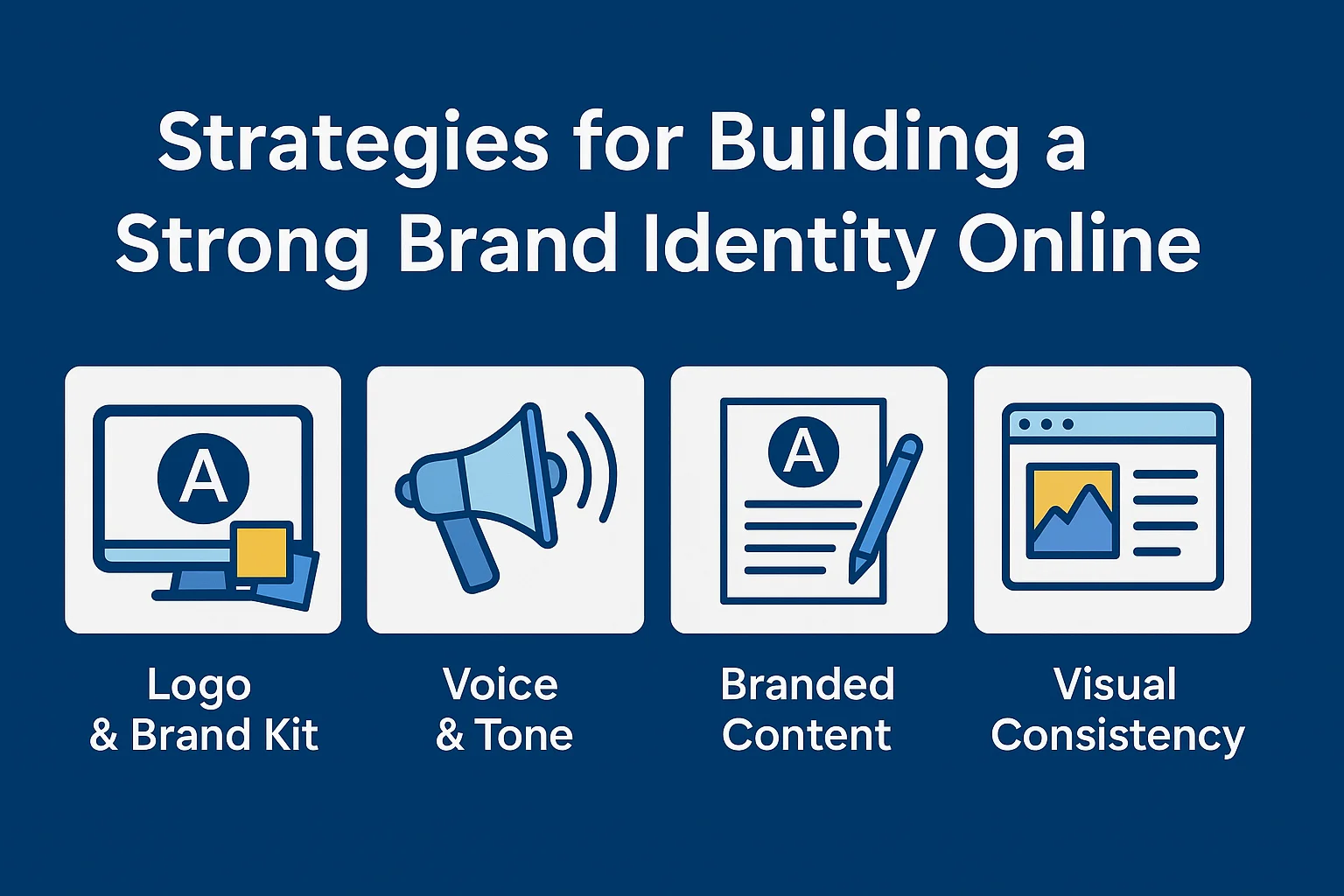
- Logo: Simple, clean, and easy to recognize
- Colors: Choose 2–3 brand colors that reflect your values (blue = trust, green = growth, red = energy)
- Typography: Use consistent fonts across your website, social media, and marketing materials
- Style Guide: Create a brand kit that includes logo usage, colors, fonts, and image style
Consistency in visuals builds instant recognition.
4. Craft a Unique Brand Voice
Your brand voice is how your brand “speaks” online. It should match your audience and brand personality.
Decide your tone:
- Professional
- Friendly
- Motivational
- Fun or casual
Use the same brand voice across blogs, social media captions, ads, emails, and customer support.
For example:
- Nike → Bold and motivational
- Apple → Simple and innovative
A consistent voice strengthens your brand identity online.
5. Build a Strong Online Presence
A major part of how to build a strong brand identity online is where and how you appear online.
- Website: Your digital home. Make it mobile-friendly, fast, SEO-optimized, and easy to navigate.
- Social Media: Choose platforms where your audience is active (Instagram, Facebook, LinkedIn, YouTube).
- Content Marketing: Share blogs, reels, videos, infographics, and posts that educate, inspire, or entertain.
Your online presence should clearly reflect who you are as a brand.
6. Be Consistent Everywhere
Consistency is the backbone of strong branding.
Use the same:
- Logo
- Colors
- Fonts
- Tone of voice
- Messaging style
Across your website, social media, ads, emails, and even WhatsApp communication.
Consistency builds trust and makes your brand look professional and reliable.
7. Leverage Storytelling
Storytelling is a powerful technique in how to build a strong brand identity online.
Share:
- Your brand’s journey
- Founder story
- Customer success stories
- Behind-the-scenes content
People connect with stories more than sales messages. Good storytelling makes your brand human and relatable.
8. Engage With Your Audience
Strong brands don’t just post content—they interact.
- Reply to comments and messages
- Run polls, Q&A sessions, and giveaways
- Ask questions in captions
- Encourage user-generated content
Engagement builds relationships, and relationships build strong brand identity online.
9. Use SEO and Paid Advertising
To grow visibility, SEO and ads are essential.
- SEO: Helps your brand appear in Google searches and builds long-term trust.
- Paid Ads: Social media and Google ads help you reach the right audience faster.
When people repeatedly see your brand online, recognition and trust increase.
10. Build Trust and Credibility
Trust is the foundation of branding.
Ways to build trust:
- Collect reviews and testimonials
- Show real customer feedback
- Collaborate with influencers
- Provide excellent customer support
A trustworthy brand automatically creates a strong brand identity online.
Conclusion
Now you understand how to build a strong brand identity online step by step. A powerful online brand is not built overnight, but with clear positioning, consistent visuals, a unique voice, engaging content, and genuine customer relationships.
In short:
A strong brand identity online = clear brand purpose + consistent design + authentic voice + valuable content + audience trust
If you stay consistent and focused, your brand will not only grow—but be remembered.

About the Author