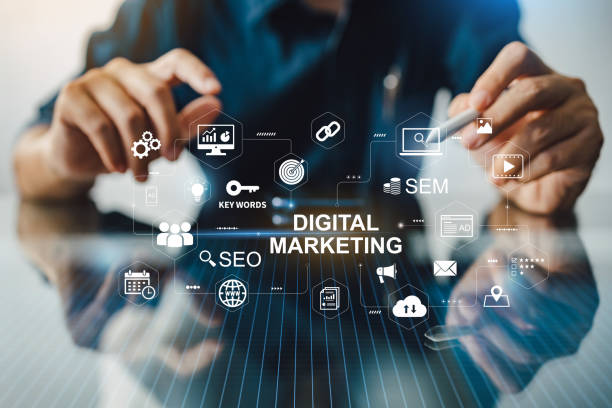
Digital marketing business technology concept. Website advertisement email social media network, SEO, SEM video and mobile application icons in virtual screen.
Digital Marketing is the most effective way to grow a business in today’s online world.
In today’s fast-paced digital world, businesses can no longer rely only on traditional marketing methods like newspapers, hoardings, or TV ads. Customers now spend most of their time online—searching on Google, scrolling social media, checking emails, and watching videos. This is where digital marketing plays a crucial role in helping businesses grow faster and smarter.
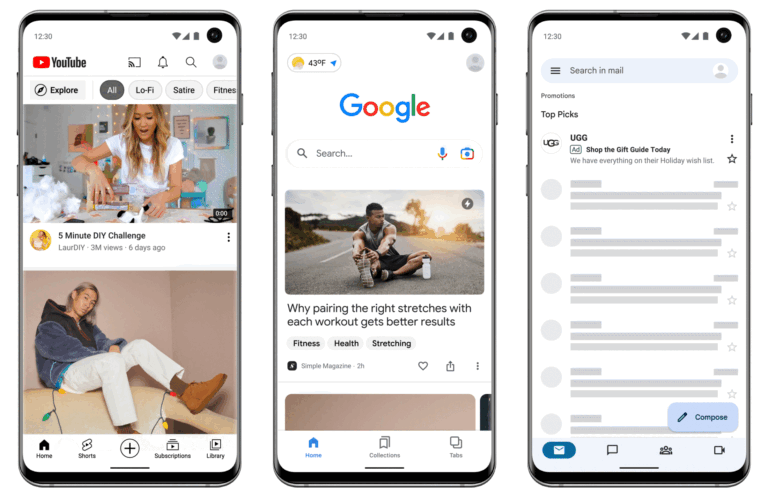
Digital marketing refers to the use of digital channels such as websites, search engines, social media platforms, email, mobile applications, and online advertising platforms to promote products and services. Unlike traditional marketing, digital marketing allows businesses to target specific audiences, track performance in real time, and achieve better results at a lower cost.
This article explains the essential elements, importance, and tools of digital marketing, and how it can help skyrocket your business growth.
Benefits of Digital Marketing
Digital marketing is the practice of promoting brands, products, or services using online platforms and digital technologies. The main goal of digital marketing is to reach potential customers where they spend most of their time—on the internet.
Unlike traditional marketing, digital marketing focuses on:
- Targeting the right audience
- Personalizing messages
- Measuring performance instantly
- Improving engagement and conversions
Whether you run a small local business or a large global company, digital marketing helps you compete effectively in the online marketplace.
Essential Elements of Digital Marketing
Digital marketing consists of several important components. Each element plays a unique role in building a strong online presence and driving business success.
1. Search Engine Optimization (SEO)
SEO (Search Engine Optimization) is the process of improving a website’s visibility on search engines like Google, Bing, and Yahoo. When people search for products or services related to your business, SEO helps your website appear on the first page of search results.
Key benefits of SEO:
- Increases organic (free) website traffic
- Builds trust and credibility
- Improves long-term online visibility
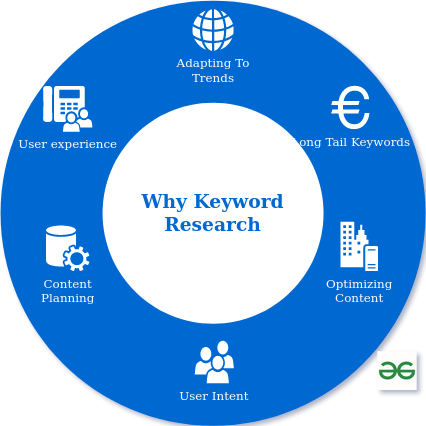
SEO includes keyword research, on-page optimization, technical SEO, and link building. A well-optimized website attracts users who are already interested in your offerings.
2. Content Marketing
Content marketing focuses on creating and sharing valuable, informative, and engaging content to attract and retain an audience. This content can be in the form of:
- Blog articles
- Videos
- Infographics
- Case studies
- E-books
Good content helps educate customers, answer their questions, and build trust. Instead of directly selling, content marketing provides value, which naturally leads to conversions and brand loyalty.
3. Social Media Marketing (SMM)
Social Media Marketing involves promoting a brand through platforms like Facebook, Instagram, LinkedIn, Twitter (X), and YouTube. These platforms help businesses connect directly with their audience.
Benefits of social media marketing:
- Builds brand awareness
- Increases engagement and followers
- Drives traffic to websites
- Helps communicate with customers
By posting regular content, running ads, and responding to comments and messages, businesses can create a strong and loyal online community.
4. Pay-Per-Click (PPC) Advertising
PPC (Pay-Per-Click) advertising is a paid marketing strategy where advertisers pay each time someone clicks on their ad. Popular PPC platforms include Google Ads and Facebook Ads.
Advantages of PPC:
- Instant traffic
- Highly targeted ads
- Control over budget
- Fast results
PPC is especially useful for new businesses or promotional campaigns where quick visibility is needed.
5. Email Marketing
Email marketing involves sending personalized emails to potential and existing customers. It is one of the most effective ways to nurture leads and build long-term relationships.
Email marketing can be used for:
- Newsletters
- Promotional offers
- Product updates
- Customer follow-ups
With proper segmentation and personalization, email marketing delivers high return on investment (ROI).
6. Affiliate Marketing
Affiliate marketing is a performance-based strategy where affiliates promote your products or services in exchange for a commission on each sale or lead.
Benefits:
- Low risk
- Pay only for results
- Expands reach through partners
It is a great way to increase sales without spending heavily on advertising.
7. Influencer Marketing
Influencer marketing involves collaborating with influencers who have a strong following on social media. Influencers promote your brand to their audience, increasing trust and credibility.
This strategy works well because people trust recommendations from individuals they follow and admire.
8. Analytics & Reporting
Analytics and reporting help measure the success of digital marketing campaigns. Tools like Google Analytics allow businesses to track:
- Website traffic
- User behavior
- Conversion rates
- Campaign performance
Data-driven decisions help optimize strategies and improve results continuously.
The Significance of Digital Marketing
Digital marketing is essential for modern businesses due to the following reasons:
🌍 Global Reach
Digital marketing allows businesses to promote their products and services worldwide at a minimal cost, breaking geographical barriers.
🎯 Targeted Audience
Ads can be shown to specific age groups, locations, interests, and behaviors, ensuring the right message reaches the right people.
💰 Cost-Effective
Compared to traditional marketing, digital marketing is more affordable and offers better returns, especially for small and medium businesses.
⚡ Real-Time Tracking
Campaign performance can be monitored in real time, allowing quick adjustments to improve outcomes.
🤝 Improved Engagement
Digital platforms enable direct interaction with customers, building trust, loyalty, and long-term relationships.
Common Digital Marketing Tools
To execute successful digital marketing campaigns, professionals use various tools:
SEO Tools
- Google Search Console
- Ahrefs
- SEMrush
These tools help analyze keywords, backlinks, and website performance.
Social Media Tools
- Canva (for designing posts)
- Hootsuite
- Meta Business Suite
They help manage content, schedule posts, and track engagement.
Email Marketing Tools
- Mailchimp
- HubSpot
These platforms help create automated email campaigns and manage leads efficiently.
Conclusion
Digital marketing is no longer optional—it is a necessity for businesses that want to grow and stay competitive. By using strategies like SEO, content marketing, social media, PPC, email marketing, and analytics, businesses can reach their target audience more effectively than ever before.In conclusion, digital marketing helps businesses grow faster and stay competitive.
With the right tools, consistent efforts, and data-driven strategies, digital marketing has the power to skyrocket your business, increase brand visibility, and drive sustainable growth in the digital era.
About the Author